Artificial Intelligence Is Changing What Creates Competitive Advantage
As AI tools become widely available, organisational knowledge and the ability to apply it effectively are becoming more important sources of competitive advantage.
Service-led articles explaining what strong outcomes look like, where to begin, and what leaders should expect.
Practical insights for business leaders on AI security, governance and responsible adoption, helping organisations manage risk, protect sensitive data and use AI with confidence.
As AI tools become widely available, organisational knowledge and the ability to apply it effectively are becoming more important sources of competitive advantage.
AI advantage depends less on the technology itself and more on the organisational knowledge, data and processes that enable it to perform.
AI is already influencing how organisations work. The real advantage will come from strong governance, trusted data and clear leadership, not technology alone.
Successful AI adoption begins with the organisation it is expected to support. By simplifying processes, improving data quality and strengthening governance first, businesses can create value immediately and give AI a far better foundation on which to perform.
Operational inefficiency often develops through thousands of individually sensible decisions. This article explores how workarounds, disconnected systems and fragmented handovers create hidden costs, and why better automation begins by understanding how work actually moves through the business.
Most organisations already have more information than they can effectively use. The challenge is bringing fragmented data together so leaders can trust what they see, understand what it means and decide what to do next.
Cloud foundations, delivery practices, and operating models built for reliable growth.
Discover how cloud growth creates hidden costs, operational complexity and security risks, and when it is time to realign technology with business priorities.
Cloud providers secure their platforms, but your organisation still controls access, configuration and data. This article explains where security responsibility really sits.
Learn how ageing cloud infrastructure can increase costs, create operational friction and restrict your organisation’s ability to grow and adapt.
A practical view of the outcomes, evidence, and operating improvements organisations should expect from Cloud Infrastructure & DevOps.
Cloud foundations, delivery practices, and operating models built for reliable growth. This leadership brief helps teams turn that ambition into a focused starting point.
Security guidance that connects technical controls with business resilience.
Seven practical questions to help business leaders test cyber security controls, challenge assumptions and gain clearer evidence from their IT provider.
Understand the minimum cyber security standards every growing business should meet, from access controls and device security to backups, monitoring and Microsoft 365.
Understand what good cyber security looks like for a growing business and the practical controls needed to prevent, detect, respond to and recover from attacks.
A practical view of the outcomes, evidence, and operating improvements organisations should expect from Cyber Security.
Security guidance that connects technical controls with business resilience. This leadership brief helps teams turn that ambition into a focused starting point.
Practical compliance programmes with clear evidence, ownership, and improvement.
A practical view of the outcomes, evidence, and operating improvements organisations should expect from ISO & Compliance.
Practical compliance programmes with clear evidence, ownership, and improvement. This leadership brief helps teams turn that ambition into a focused starting point.
Resilience planning that helps critical operations recover with confidence.
A practical guide to maintaining and recovering production when failures across IT systems, operational technology or critical dependencies disrupt UK manufacturing.
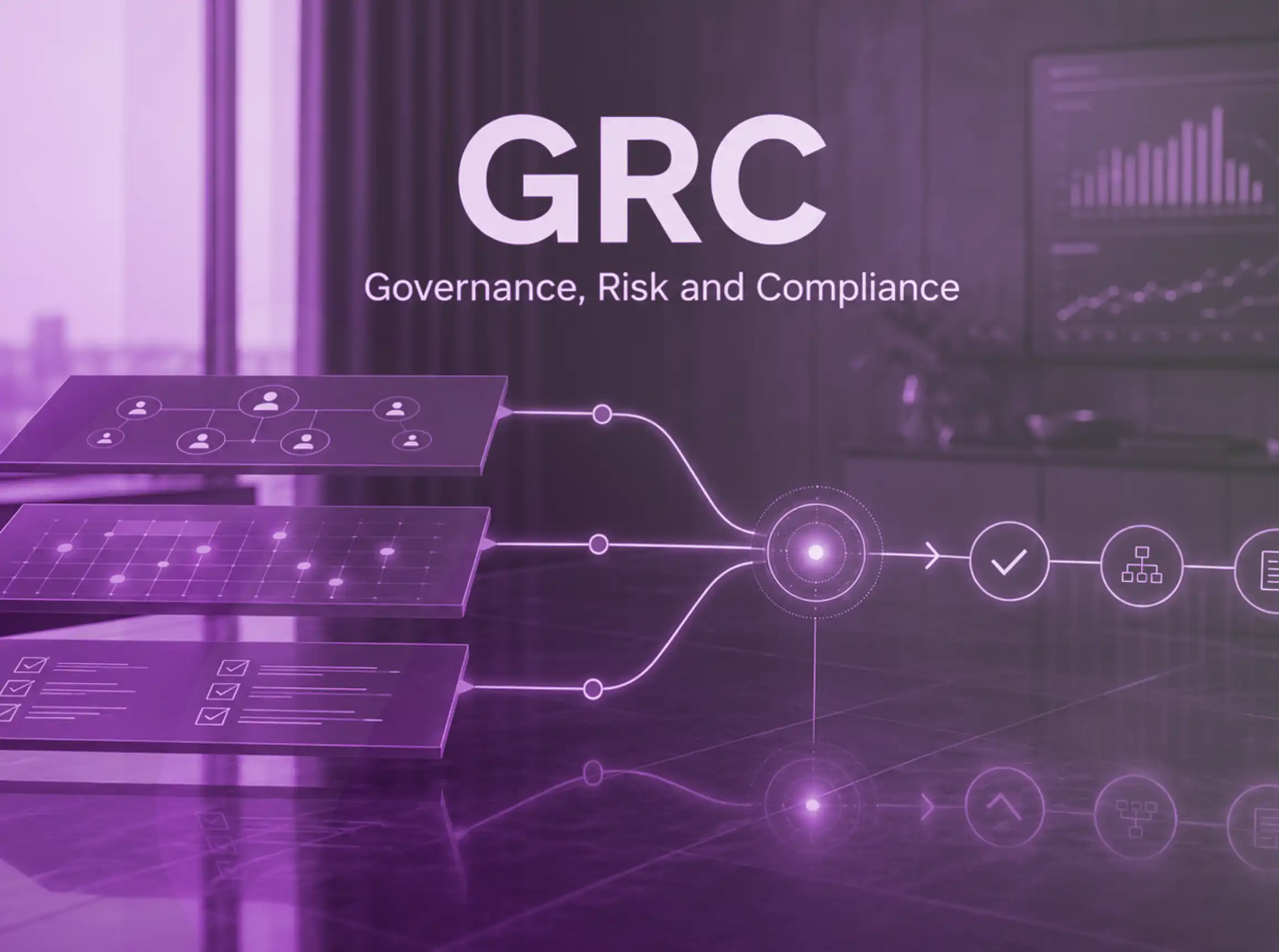
Effective GRC is not measured by the number of policies produced, but by an organisation’s ability to make and evidence defensible decisions.
Technology is no longer just a support function. It now shapes how organisations operate, manage risk, invest and make strategic decisions.
Business continuity depends less on plans and more on understanding the people, technology, suppliers and decisions your organisation relies upon.
A practical view of the outcomes, evidence, and operating improvements organisations should expect from Business Continuity.
Resilience planning that helps critical operations recover with confidence. This leadership brief helps teams turn that ambition into a focused starting point.
Let's strengthen reliability and optimise your IT for efficiency.